Are Brahma, Vishnu, and Shiva Mortal?
Find Answers / Are Brahma, Vishnu, and Shiva Mortal?
Are Brahma, Vishnu, and Shiva Mortal?
Are Brahma, Vishnu, and Shiva Mortal? The Absolute Proof from the Puranas
In mainstream Hindu discourse, the Trimurti—Lord Brahma, Lord Vishnu, and Lord Shiva—are widely celebrated as Amar (immortal) beings who exist outside the boundaries of death. However, when we transcend popular folklore and examine the root scriptures, a deeper cosmic reality is revealed.
By analyzing Chapter 6 of the Shiva Purana (Rudra Samhita) alongside the direct declarations in the Shrimad Devi Bhagwat Purana, we find definitive scriptural evidence that Brahma, Vishnu, and Shiva possess a calculated lifespan. They are macro-cosmically bound by cyclic creation, manifestation, and ultimate dissolution.
Part 1: The Direct Confession of Birth and Death (Devi Bhagwat Purana)
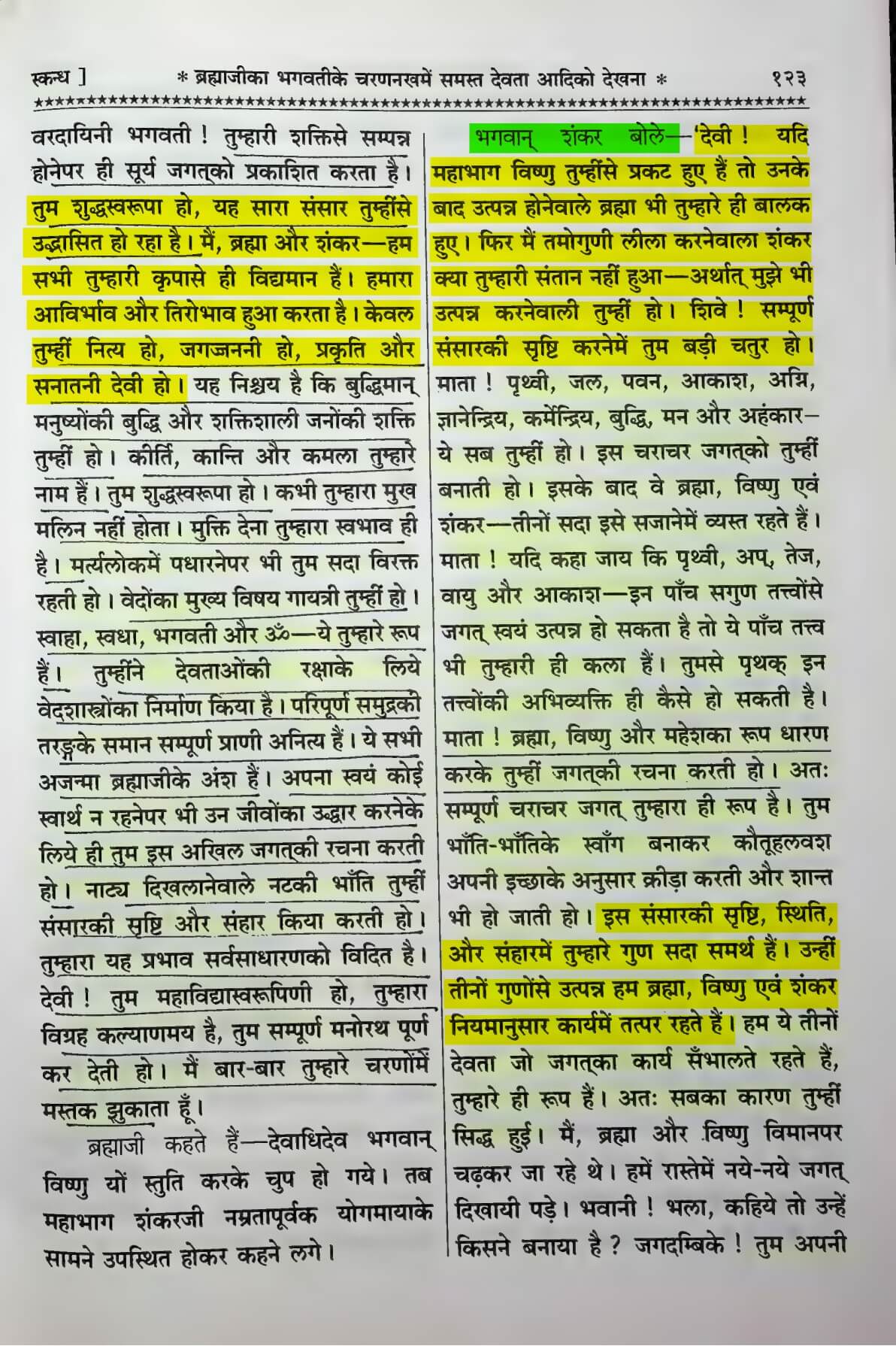
We do not need to speculate about the mortality of the Trimurti, because the deities openly testify to their own cyclic nature. The most devastating proof against the concept of their absolute immortality is found on shrimad-devi-bhagwat-page123-full.jpg.
1. The Admission of "Aavirbhaav" and "Tirobhaav"
In a direct prayer addressed to the supreme Goddess, the Trimurti explicitly state that they are subject to appearing and disappearing from the cosmos. The highlighted text reads:
"Hamara aavirbhaav aur tirobhaav hua karta hai. Keval tumhi nitya ho..." (Our manifestation/birth and withdrawal/death keep happening. Only you are eternal...)
By using the exact technical terms Aavirbhaav (orderly manifestation into physical existence) and Tirobhaav (dissolution or exit from existence), the deities confirm that their forms are not permanent fixtures of reality, but are subject to a cosmic clock.
2. Lord Shiva’s Confirmation of Being Created
On the exact same page (shrimad-devi-bhagwat-page123-full.jpg), Lord Shiva reinforces this fact by questioning his own independent immortality:
"Goddess! If Vishnu has manifested from you, then Brahma is also your child. Then, am I... not your son? Meaning, I am also created by you."
In Vedic metaphysics, anything that is generated or created (Jat) must logically have a point of conclusion. By identifying themselves as children who are born, they inherently reveal their mortality.
3. Lord Vishnu's Infant State during Dissolution
Further proof of their structural limitations is found on shrimad-devi-bhagwat-page120.jpg, where Lord Vishnu recalls being a helpless child during the great cosmic dissolution (Pralyarnavam), resting on a banyan leaf while the Goddess rocked his cradle. If a deity is reduced to a dependent infant at the resetting of a universe, his form is clearly governed by the cycles of time.
Part 2: The Structural Mechanism of Mortality (Shiva Purana)
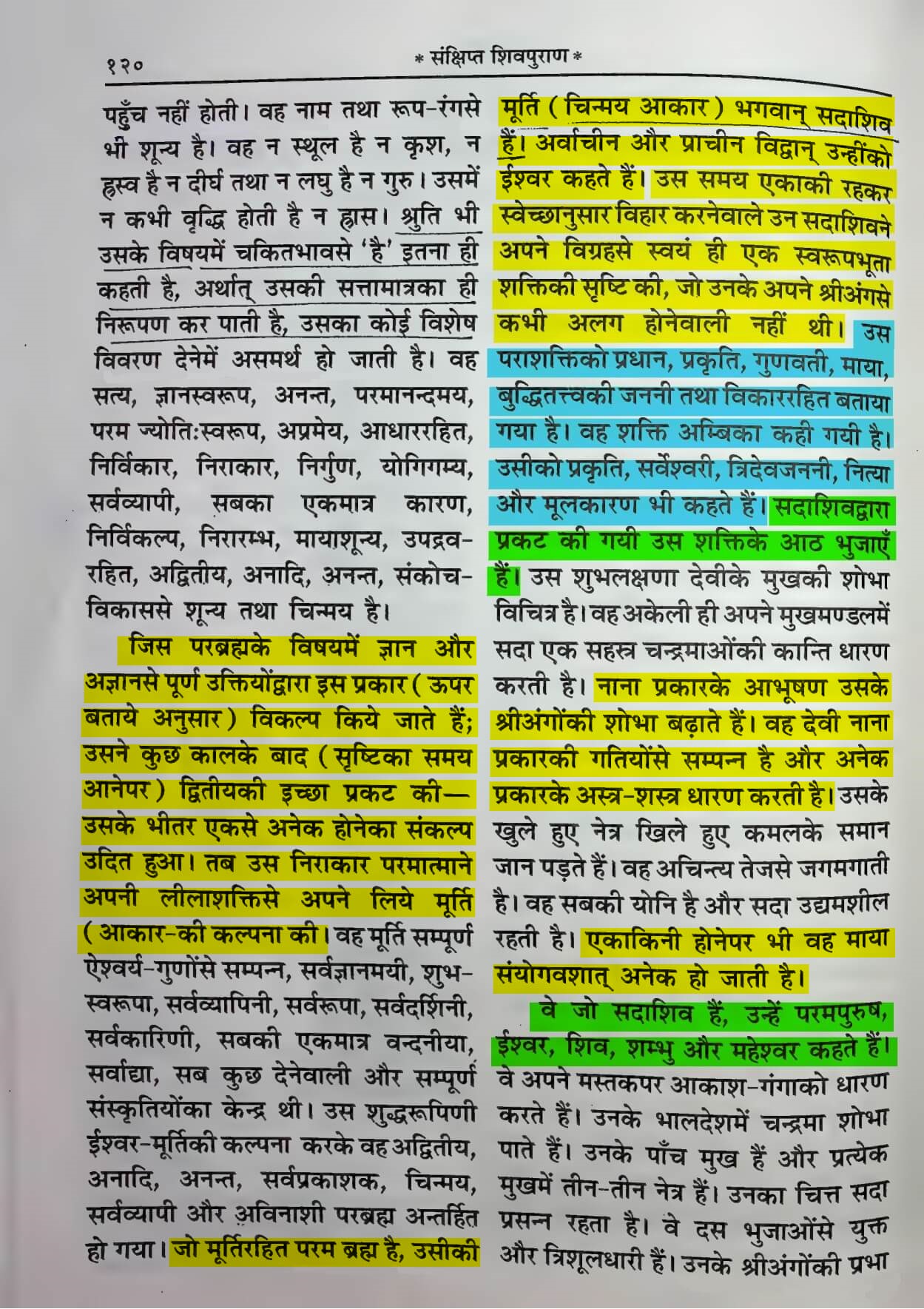
The Shiva Purana (Rudra Samhita, Chapter 6) provides the structural timeline explaining why and how the Trimurti undergo these cycles. It lays out the chronological history of how they are brought forth and retired by their original parents, Lord Sadashiva and Goddess Durga (Ambika/Prakriti).
1. The Sequential Emergence (Aavirbhaav)
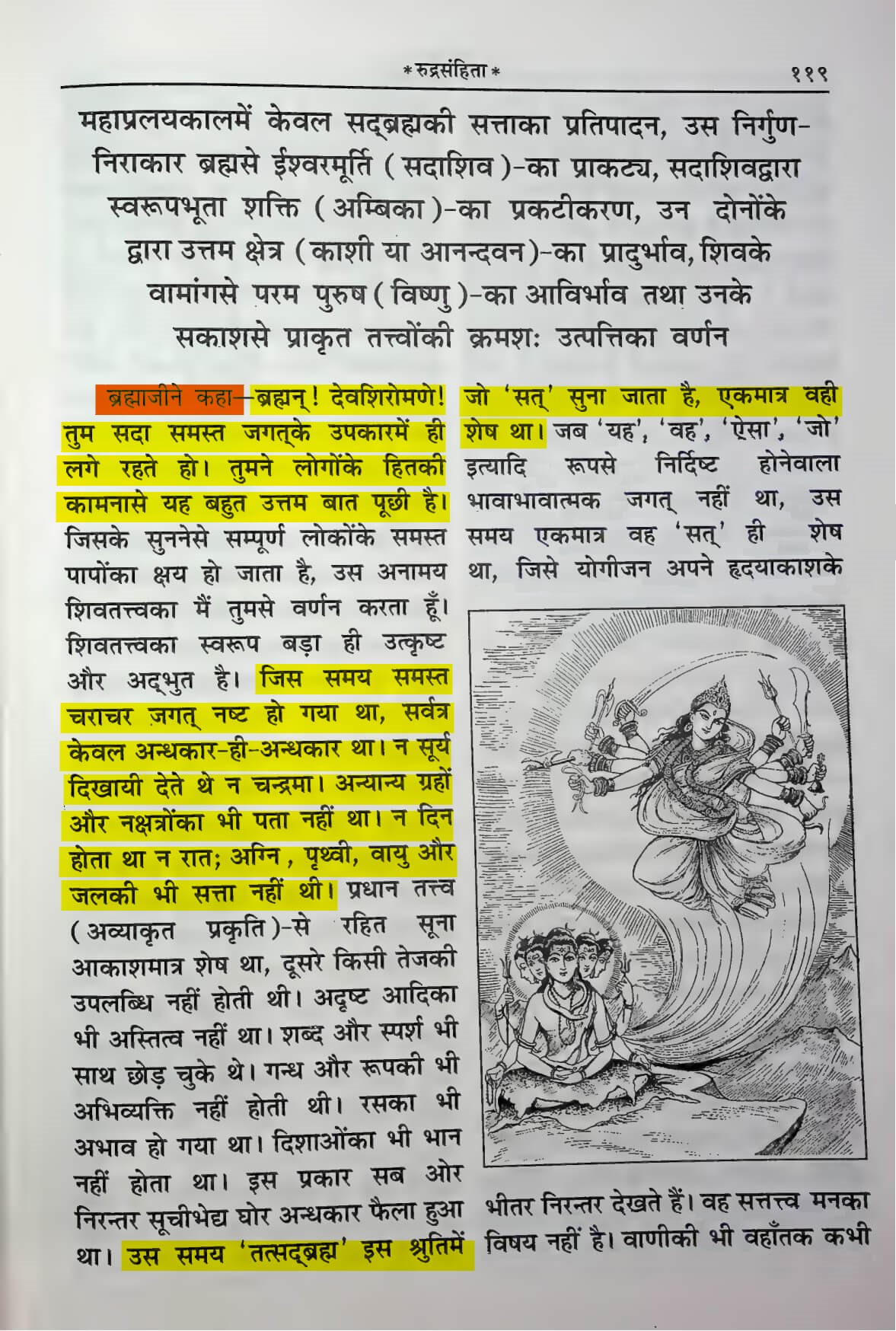
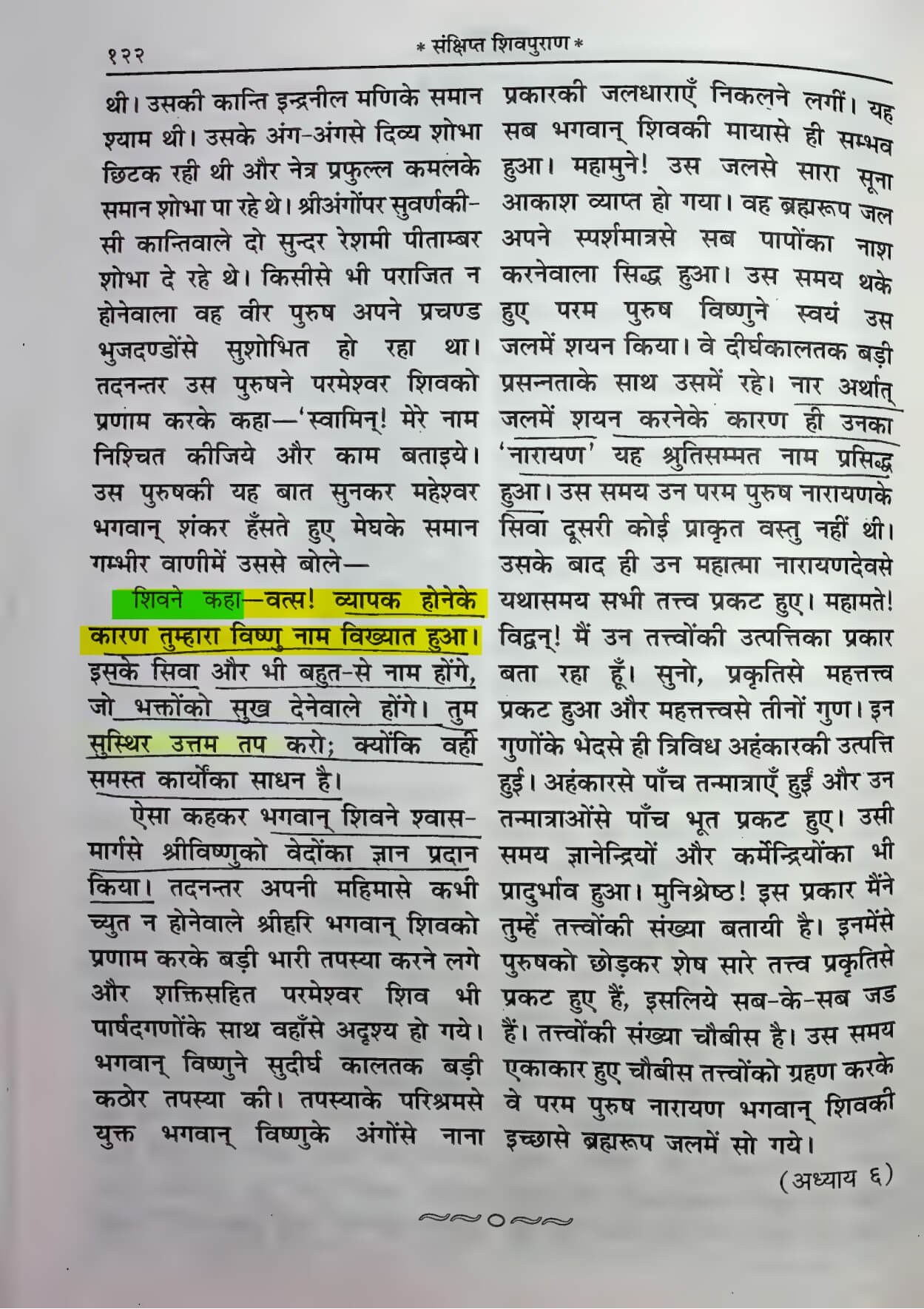
According to the text, before creation, there was only the unmanifest void (shiv-purana-rudrasamhita-page119.jpg). When Lord Sadashiva and Durga decided to build the material worlds, they did not create the Trimurti all at once, nor did the Trimurti exist eternally beside them.
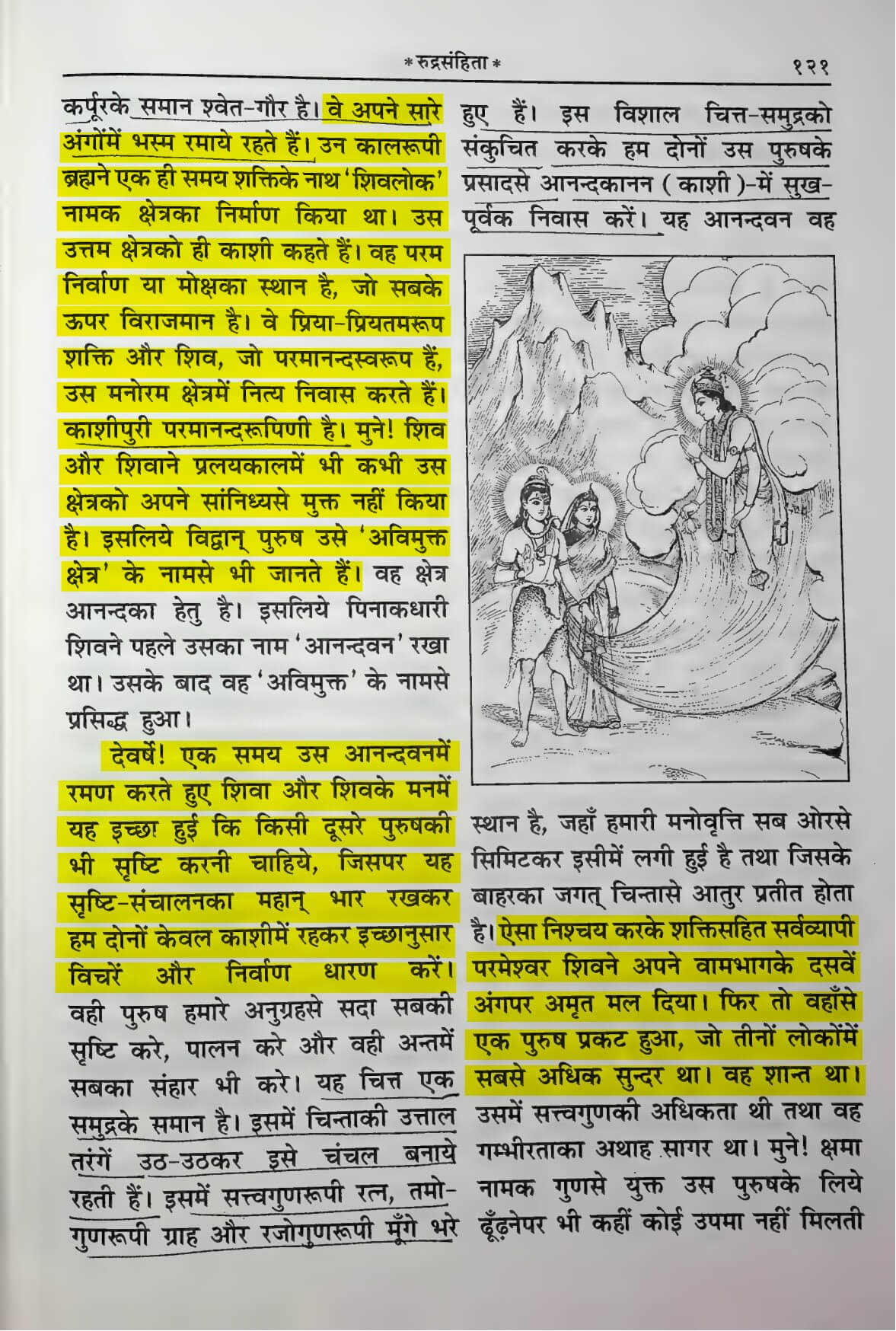
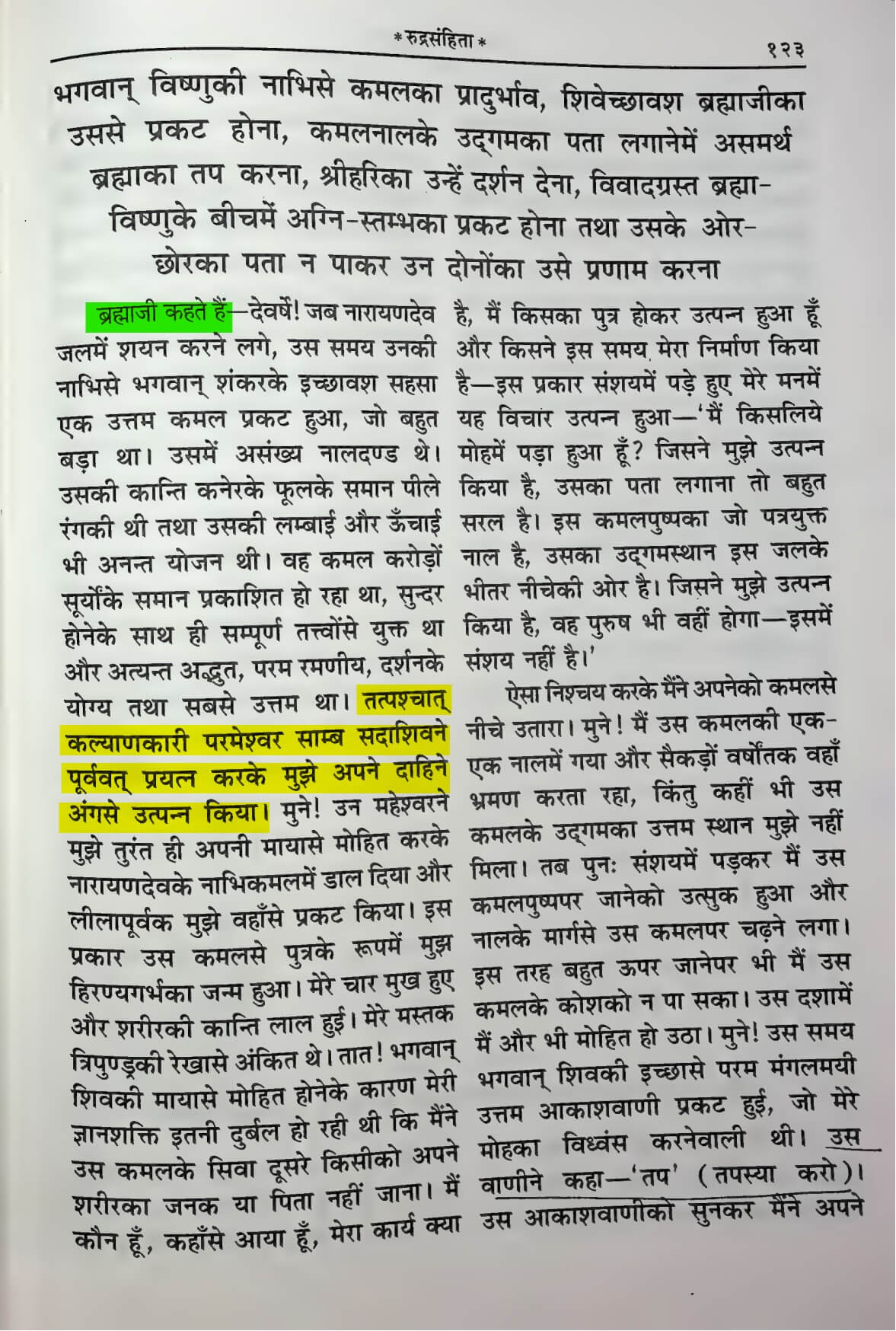
- As documented on
shiv-purana-rudrasamhita-page121.jpg, Lord Sadashiva first manifested Lord Vishnu from his left side. - As documented on
shiv-purana-rudrasamhita-page123.jpg, Lord Brahma explicitly states: "Thereafter, the benevolent Parameshvar Sadashiva... created me from his right limb."
Because Brahma, Vishnu, and Shiva have a documented beginning in the creation timeline, they mathematically must have an end.
2. The Finite Age of Sadashiva's Progeny
The original text analysis derived from these chapters notes that when the macro-cosmic timeline reaches its end, a Great Dissolution (Mahapralaya) takes place.
- During this event, the material universes are systematically shattered.
- The current Brahma, Vishnu, and Shiva finish their designated structural lifespans and undergo Tirobhaav, meaning their energies are pulled back and completely dissolved into the physical bodies of their parents, Sadashiva and Prakriti.
- They remain unmanifest until the next cosmic dawn, when a new Brahma, Vishnu, and Shiva are brought forth to manage the next creation cycle.
Part 3: Comparative Scriptural Matrix on Mortality
| Scriptural Fact | The Reality for the Trimurti | Direct Proof Source |
|---|---|---|
| Are they subject to birth/manifestation? | Yes. They explicitly undergo Aavirbhaav via Sadashiva and Prakriti. | shrimad-devi-bhagwat-page123-full.jpg & shiv-purana-page121/123 |
| Are they subject to death/withdrawal? | Yes. They explicitly confess to undergoing cyclic Tirobhaav. | shrimad-devi-bhagwat-page123-full.jpg |
| Who is genuinely eternal (Nitya)? | Only their primordial parents (Sadashiva and Goddess Durga). | shrimad-devi-bhagwat-page119.jpg & page123-full.jpg |
Conclusion: The Final Scriptural Verdict
The belief that Brahma, Vishnu, and Shiva live forever without change is flatly contradicted by their own words within the text architecture of the Puranas.
According to the Shiva Purana and the Shrimad Devi Bhagwat Purana, the Trimurti are incredibly long-lived, powerful, and majestic administrative deities, but they are macro-cosmically mortal. They operate within fixed lifespans, experiencing continuous cycles of Aavirbhaav (manifestation) and Tirobhaav (dissolution) under the ultimate, eternal authority of their parents, Lord Sadashiva and Goddess Durga.
पुराणों का सरल हिंदी रूपांतरण: क्या त्रिदेव नाशवान (मोर्टल) हैं?
शिव पुराण और श्रीमद्देवीभागवत पुराण के अकाट्य प्रमाणों के अनुसार, ब्रह्मा, विष्णु और शिव (त्रिदेव) की अमरता का सच इस प्रकार है:
१. "आविर्भाव" और "तिरोभाव" का साक्षात प्रमाण (देवीभागवत पुराण)
इस विषय में हमें किसी अनुमान की आवश्यकता नहीं है, क्योंकि स्वयं त्रिदेवों ने स्वीकार किया है कि उनका जन्म और अंत होता है। shrimad-devi-bhagwat-page123-full.jpg पर तीनों देव जगदम्बा की स्तुति करते हुए स्पष्ट शब्दों में कहते हैं:
"हमारा आविर्भाव (कटिबद्ध प्रकट होना/जन्म) और तिरोभाव (विलीन होना/मृत्यु) हुआ करता है। केवल तुम ही नित्य (सदा रहने वाली) हो..."
- शिव जी की गवाही: इसी पृष्ठ पर भगवान शंकर कहते हैं—"हे देवी! यदि विष्णु और ब्रह्मा आपसे प्रकट हुए हैं, तो क्या मैं (शंकर) आपका पुत्र नहीं हुआ? अर्थात मुझे भी उत्पन्न करने वाली आप ही हैं।" सनातन दर्शन के अनुसार, जिसका भी जन्म (जाति) होता है, उसका अंत होना निश्चित है।
- विष्णु जी की गवाही:
shrimad-devi-bhagwat-page120.jpgपर भगवान विष्णु अपने बाल रूप को याद करते हैं जब प्रलय के समय वे एक वटवृक्ष के पत्ते पर सो रहे थे और माता दुर्गा उन्हें पालना झुला रही थीं। यह साबित करता है कि महाप्रलय के समय त्रिदेवों की स्थिति भी एक सीमित बालक जैसी हो जाती है।
२. सृष्टि चक्र और काल की सीमा (शिव पुराण - रुद्रसंहिता)
शिव पुराण (अध्याय ६) के अनुसार, जब ब्रह्मांड की आयु पूरी होती है, तो महाप्रलय (Great Dissolution) आता है।
- क्रमबद्ध उत्पत्ति (आविर्भाव): सृष्टि की शुरुआत में भगवान सदाशिव और दुर्गा जी ने अपने वाम भाग से विष्णु जी को (
shiv-purana-rudrasamhita-page121.jpg) और दाहिने अंग से ब्रह्मा जी को (shiv-purana-rudrasamhita-page123.jpg) उत्पन्न किया था। - महाप्रलय में विलीन होना (तिरोभाव): जब महाप्रलय आता है, तो इन त्रिदेवों की निश्चित आयु समाप्त हो जाती है। तब इनके भौतिक स्वरूप और शक्तियां वापस इनके मूल माता-पिता (सदाशिव और दुर्गा) के भीतर पूरी तरह समाहित और विलीन (Dissolve) हो जाती हैं। अगली सृष्टि की शुरुआत में नए त्रिदेवों को पुनः प्रकट किया जाता है।
⚡ संक्षिप्त निष्कर्ष तालिका (Quick Summary Matrix)
| शास्त्रीय तथ्य | त्रिदेवों की वास्तविक स्थिति | प्रामाणिक स्रोत (Scans) |
|---|---|---|
| क्या त्रिदेवों का जन्म होता है? | हाँ। वे सदाशिव और दुर्गा जी के माध्यम से आविर्भाव (प्रकट) होते हैं। | shrimad-devi-bhagwat-page123-full.jpg |
| क्या त्रिदेवों का अंत होता है? | हाँ। महाप्रलय के समय वे अपने माता-पिता में तिरोभाव (विलीन) हो जाते हैं। | shrimad-devi-bhagwat-page123-full.jpg |
| वास्तव में सनातन/नित्य कौन है? | केवल उनके मूल माता-पिता (भगवान सदाशिव और माता दुर्गा)। | shrimad-devi-bhagwat-page119.jpg & page123-full.jpg |
निष्कर्ष: लोक-कथाओं में भले ही त्रिदेवों को पूर्णतः अमर माना जाता हो, परंतु केंद्रीय पुराणों के अनुसार वे बेहद लंबी आयु वाले प्रशासनिक देवता हैं, जो महा-ब्रह्मांडीय स्तर पर नाशवान (Mortal) हैं। वे काल के चक्र के अधीन हैं और उनके माता-पिता (सदाशिव और दुर्गा) ही एकमात्र परम शाश्वत सत्य हैं।
Frequently Asked Questions (FAQs)
Q1: Are Lord Brahma, Lord Vishnu, and Lord Shiva immortal (Amar)?
- Answer: In popular folklore, they are considered immortal because their lifespans span billions of human years. However, according to the core texts of the Shiva Purana and Shrimad Devi Bhagwat Purana, they are macro-cosmically mortal. They have a fixed celestial lifespan and undergo continuous cycles of manifestation and ultimate dissolution.
Q2: What do the terms "Aavirbhaav" and "Tirobhaav" mean regarding the Trimurti?
- Answer: On page 123-full of the Shrimad Devi Bhagwat Purana, the Trimurti explicitly use these terms to describe their cyclic existence. Aavirbhaav means their orderly manifestation or birth into the material universe from their parents, while Tirobhaav means their ultimate withdrawal, death, or dissolution back into their primordial source during the Great Dissolution (Mahapralaya).
Q3: Who remains completely eternal (Nitya) when Brahma, Vishnu, and Shiva dissolve?
- Answer: In true sense only the Supreme Lord remains eternal but as per the puranic scriptures, these explicitly state that only their primordial cosmic parents—Lord Sadashiva (the unmanifest Absolute taking form) and Goddess Durga (Purna Prakriti/Ambika)—are completely eternal (Nitya). They survive the dissolution of the material realms, while the physical forms of the Trimurti merge back into them. However these also perish during the "Great Dissolution".
Q4: If the Trimurti are subject to birth and death, why are they called "Gods"?
- Answer: In Puranic cosmology, Brahma, Vishnu, and Shiva are supreme administrative deities appointed to govern the functions of creation, preservation, and destruction within the material worlds. While they possess immense divine powers far beyond human comprehension, they still operate within the boundaries of cosmic time and the structural laws established by their parents.
Appendix
Evidence - Shrimad Devi Bhagwat Puran
Page 123
Evidence - Shiv Purana
Pages 119 - 123
Who is the True Father and Mother of Brahma, Vishnu, and Shiva ➤
